
Last Updated: May 8, 2026
A Powerful Introduction to Mongolian Shamanism and Folk Religion
If you’re fascinated by ancient spiritual traditions, shamanic healing practices, or indigenous folk religions, this comprehensive guide to Mongolian shamanism will deepen your understanding of one of the world’s oldest continuous spiritual systems. Whether you’re a spiritual seeker exploring shamanic practices, a student of world religions, or someone drawn to energy healing and intuitive guidance, understanding Mongolian shamanism offers valuable insights into humanity’s enduring connection with the spirit world. Malcolm Moorhouse, a world-renowned psychic and shamanic healer based in Glastonbury, has long studied these ancient traditions to inform his own spiritual healing sessions and intuitive guidance work.
According to anthropological research, shamanic practices in Mongolia date back at least 30,000 years, making it one of the oldest spiritual traditions still actively practiced today. Studies conducted by researchers at the Max Planck Institute for Evolutionary Anthropology confirm that shamanic traditions in Central Asia represent some of humanity’s earliest organized spiritual systems.
What Is Mongolian Shamanism?
Mongolian shamanism, more broadly called the Mongolian folk religion or occasionally Tengerism, refers to the animistic and shamanic ethnic religion practiced in Mongolia and its surrounding areas, including Buryatia and Inner Mongolia, since at least the age of recorded history. The Mongolian endonym is Böö mörgöl (Бөө мөргөл), which translates roughly to “shamanic worship” or “shamanic reverence.”
In its earliest known stages, this spiritual tradition was intricately tied to all other aspects of social life and to the tribal organization of Mongolian society. Over centuries, it has become influenced by and mingled with Buddhism, creating unique hybrid practices. During the socialist years of the twentieth century, Mongolian shamanism was heavily repressed by Soviet-aligned governments. Since the fall of communism in 1991, it has made a remarkable comeback, with thousands of Mongolians returning to their ancestral spiritual practices.
Understanding Yellow and Black Shamanism
Yellow shamanism is the term used to designate the particular version of Mongolian shamanism that adopts the expressive style of Buddhism. The term “yellow” indicates Buddhism in Mongolia, since most Buddhists there belong to what is called the Gelug or “Yellow sect” of Tibetan Buddhism, whose members wear distinctive yellow hats during religious services and ceremonies.
This terminology also serves to distinguish Buddhist-influenced shamanism from a form of shamanism not influenced by Buddhism, called black shamanism. Practitioners of black shamanism maintain that their practices represent the original, pre-Buddhist shamanic traditions of the Mongolian steppes. This distinction remains important to modern practitioners who work with different spiritual lineages and energy systems.
The Central Beliefs of Mongolian Shamanism
Mongolian shamanism is centered on the worship of the tngri (gods) and the highest Tenger (Heaven, God of Heaven, God) or Qormusta Tengri. In the Mongolian folk religion, Genghis Khan is considered one of the embodiments, if not the main embodiment, of the Tenger. This belief system reflects the deep connection between spiritual practice and historical identity that characterizes Mongolian culture.
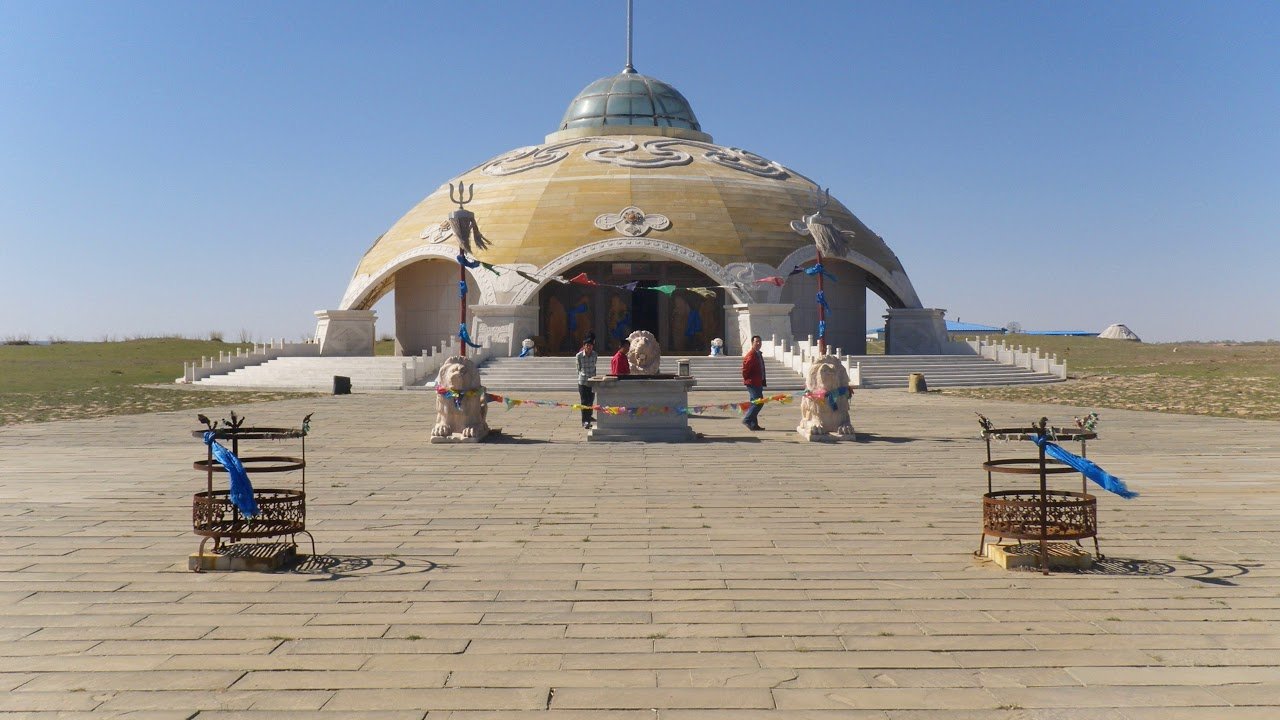
The Mausoleum of Genghis Khan in Ordos City, in Inner Mongolia, remains an important center of this worship tradition, drawing pilgrims and spiritual seekers from across the Mongolian cultural sphere. This sacred site represents the continuation of spiritual practices that have endured for nearly a millennium.
Core Features of Mongolian Shamanic Practice
Mongolian shamanism is an all-encompassing system of belief that includes medicine, religion, reverence of nature, and ancestor worship. This holistic approach to spirituality resonates deeply with modern seekers interested in energy healing, chakra alignment, and spiritual growth. Professional psychic readers like Malcolm Moorhouse, a Reiki Master and shamanic healer in Glastonbury, recognize the profound wisdom embedded in these ancient practices.
Central to the system were the activities of male and female intercessors between the human world and the spirit world—shamans (böö) and shamanesses (udgan). These spiritual practitioners served as bridges between realms, offering healing, guidance, and protection to their communities. They were not the only ones to communicate with the spirit world: nobles and clan leaders also performed spiritual functions, as did commoners, though the hierarchy of Mongolian clan-based society was reflected in the manner of worship as well.
The Divine Hierarchy and Spirit Classes
Klaus Hesse described the complex spiritual hierarchy in clan-based Mongolian society based on sources dating back to the 13th century. Understanding this hierarchy helps modern spiritual practitioners appreciate the sophisticated cosmology that underlies Mongolian shamanic practice.
The Highest Pantheon of Spirits
The highest group in the pantheon consisted of 99 tngri—55 of them benevolent or “white” and 44 terrifying or “black”—along with 77 natigai or “earth-mothers” and various other spiritual beings. The tngri were called upon only by leaders and great shamans and were common to all the clans, representing universal spiritual forces that transcended tribal boundaries.
Ancestral Spirit Categories
After the tngri, three groups of ancestral spirits dominated the spiritual landscape. The “Lord-Spirits” were the souls of clan leaders to whom any member of a clan could appeal for physical or spiritual help. The “Protector-Spirits” included the souls of great shamans (ĵigari) and shamanesses (abĵiya), offering guidance and protection from the spirit world.
The “Guardian-Spirits” were made up of the souls of smaller shamans (böö) and shamanesses (udugan) and were associated with specific localities, including sacred mountains, rivers, and other natural features in the clan’s territory. This connection between spirits and landscape reflects the deep animistic foundations of Mongolian spirituality.
The Role of White and Black Shamans
White shamans could only venerate white spirits, and if they called upon black spirits they “lost their right in venerating and calling the white spirits.” Black shamans worked exclusively with black spirits and would be too terrified to call upon white spirits since the black spirits would punish them for such transgression. White or black designation was assigned to spirits according to social status, and to shamans “according to the capacity and assignment of their ancestral spirit or spirit of the shaman’s descent line.”
Reverence for Genghis Khan
Nationwide reverence of Genghis Khan existed until the 1930s, centered on a shrine that preserved mystical relics of the great Khan, located in the Ordos Loop of Inner Mongolia, China. This spiritual tradition represents a fascinating intersection of historical memory and religious practice.
During the Japanese occupation of China, the Japanese military tried to take possession of these relics to catalyze a pro-Japanese Mongol nationalism, but they failed in this attempt. Within the Mongolian People’s Republic (1924–92), the Mongolian native religion was suppressed, and Genghis’ shrines were destroyed as part of communist anti-religious campaigns.
In Inner Mongolia, however, the worship of the cultural hero persisted. The hereditary custodians of the shrines survived there, preserving ancient manuscripts of ritual texts written partially in an unintelligible language called the “language of the gods.” With the establishment of the People’s Republic of China, the Chinese rallied Mongol nationalism to the new state and constructed the Shrine of Genghis Khan in Ordos City, where they gathered the old sanctuary tents, confirmed the hereditary guardians in their offices, and subsidized annual sacrifices.
Sacred Ovoos: Altars of Worship
Ovoos or aobaoes (Mongolian: овоо) are sacrificial altars shaped like mounds that are traditionally used for worship in the indigenous religion of Mongols and related ethnic groups. Every ovoo is considered the representation of a god, serving as a focal point for spiritual energy and communication with the divine.
There are ovoos dedicated to heavenly gods, mountain gods, other gods of nature, and also to gods of human lineages and communities. In Inner Mongolia, the aobaoes for ancestor worship can be private shrines of an extended family or kin group, or they may be common to villages, banners, or leagues. Sacrifices to the aobaoes are made by offering slaughtered animals, joss sticks, and libations, creating a sacred exchange between the human and spirit worlds.
Historical Development of Mongolian Shamanism
Various aspects of shamanism, including the tngri and their chief deity Qormusata Tngri, are described in the thirteenth-century work known as The Secret History of the Mongols—the earliest historical source written in Mongolian. Sources from that period, however, do not present a complete or coherent system of beliefs and traditions. A much richer set of sources emerges from the seventeenth century onward, presenting a Buddhist-influenced “yellow” shamanism that many scholars believe indicates the continued tradition of older shamanic practices.
Buddhism first entered Mongolia during the Yuan dynasty (thirteenth-fourteenth century) and was briefly established as a state religion. The cult of Genghis Khan, who had been accepted into the tngri pantheon, became annexed into Buddhist practice as well, creating the syncretic traditions that characterize Mongolian spirituality today.
Modern Revival and Contemporary Practice
During the Soviet domination of the Mongolian People’s Republic, all varieties of shamanism were repressed as part of anti-religious campaigns. After 1991, when the era of Soviet influence ended, religion including Buddhism and shamanism made a remarkable comeback across Mongolia and the surrounding regions.
Recent research by anthropologists has confirmed that shamanism continues to be a vital part of Mongolian spiritual life. Ágnes Birtalan, for instance, recorded a series of invocations and chants to the important deity Dayan Deerh in 2005 in Khövsgöl Province. In June 2017, psychology professors Richard Noll and Leonard George conducted fieldwork among Mongol shamans, documenting nocturnal summer solstice fire rituals held near Ulaanbaatar.
Buryat Shamanism: A Regional Tradition
The territory of the Buryats, who live around Lake Baikal, was invaded by the Russian Empire in the seventeenth century. This population came to accept Buddhism in the eighteenth century while simultaneously recognizing themselves as Mongol. Today, black shamanism among the Buryats invokes traditional shamanic deities, whereas white shamanism invokes Buddhist deities and recites Buddhist incantations while wearing traditional black shamanist accouterments.
White shamans worship Sagaan Ubgen and Burkhan Garbal (the “Ancestral Buddha”). The proliferation of Buryat shamans in the 1990 to 2001 period has been analyzed as part of a historical and genetic “search for roots” among the marginalized Buryat peoples of Mongolia, Russia, and China.
Shamanic Tools and Attributes
An important attribute of Mongolian shamanism shared with all other shamanisms of Inner Asia is the sacred drum. Mongolian shaman drums may incorporate the shaman’s ongon or ancestral spirit. The drum’s skin was often made of horse skin, with the drum itself representing “the saddle animal on which the shaman rides or the mount that carries the invoked spirit to the shaman.”
These tools and practices offer profound insights for modern practitioners of energy healing, spiritual guidance, and intuitive development. Understanding these traditions can enhance one’s own spiritual practice, whether through Reiki healing sessions, shamanic healing work, or psychic readings.
Frequently Asked Questions About Mongolian Shamanism
What is the difference between yellow and black shamanism in Mongolia?
Yellow shamanism refers to Mongolian shamanic practices that have incorporated Buddhist elements, named after the yellow hats worn by Gelug Buddhist practitioners. Black shamanism, in contrast, claims to represent the original pre-Buddhist shamanic traditions of Mongolia, working exclusively with traditional shamanic deities rather than Buddhist-influenced spiritual beings.
Who can become a shaman in Mongolian tradition?
In traditional Mongolian society, shamans (böö) and shamanesses (udgan) typically received their calling through ancestral lineage or through a spiritual crisis known as the “shamanic illness.” The designation as white or black shaman was determined by the capacity and assignment of their ancestral spirit or the spirit of the shaman’s descent line.
How does Mongolian shamanism relate to modern spiritual practices like Reiki or energy healing?
Mongolian shamanism shares fundamental principles with modern energy healing practices, including the belief in a spirit world that can be accessed for healing and guidance, the importance of energy clearing and protection, and the role of trained practitioners as intermediaries between physical and spiritual realms. Shamanic healers like Malcolm Moorhouse, based in Glastonbury, draw upon these ancient traditions to inform contemporary healing work.
What role do ancestors play in Mongolian shamanic practice?
Ancestor worship is central to Mongolian shamanism, with ancestral spirits organized into categories including Lord-Spirits, Protector-Spirits, and Guardian-Spirits. These ancestral beings can be called upon for physical or spiritual help, guidance, and protection, serving as intermediaries between the living and the divine.
Is Mongolian shamanism still practiced today?
Yes, Mongolian shamanism has experienced a significant revival since the fall of communism in 1991. Research by anthropologists confirms that shamanism continues to be an active part of Mongolian spiritual life, with organized groups like the Corporate Union of Mongolian Shamans conducting regular ceremonies and rituals.
What are ovoos and how are they used in Mongolian spiritual practice?
Ovoos are sacred mound-shaped altars used for worship in Mongolian folk religion. Each ovoo represents a deity—whether heavenly gods, mountain gods, nature spirits, or ancestral beings. Worshippers make offerings including animal sacrifices, incense, and libations to establish connection with the spiritual forces associated with each ovoo.
How can understanding Mongolian shamanism benefit my own spiritual journey?
Studying Mongolian shamanism offers insights into humanity’s ancient connection with the spirit world, ancestor reverence, and nature-based spirituality. These principles can enhance modern practices including meditation, energy healing, intuition development, and spiritual growth, providing a deeper context for understanding spirit guides, energy protection, and shamanic healing techniques.
📅 Last updated:
0 Comments